About this project
My site is called conceptual game art, where I collect the best game concepts, games that have received awards and caused the greatest reviews for the visual component.
At this stage, the site highlights the concepts of two popular games – Cyberpunk 2077 and Stray. The site contains general information about the game and information about the artists who created the concepts with a gallery of their works.
My site collects information about artists, their works in one place, for one specific game, project. This is very convenient for beginning or current concept artists to analyze the creation of a concept for games, for inspiration and to learn from the experience of how different artists work within the boundaries of one idea, both individually and in a team, creating a complete product.
1. The world of “High Tech, Low Life”
Now presented on the site, the games Cyberpunk 2077 and Stray can be said to have a common ideological and aesthetic horizon, since both are deeply rooted in the canons of the cyberpunk genre. Despite the different gameplay, they are united by key conceptual elements:
Both games demonstrate the classic of the genre: high technology against the backdrop of decay and poverty.
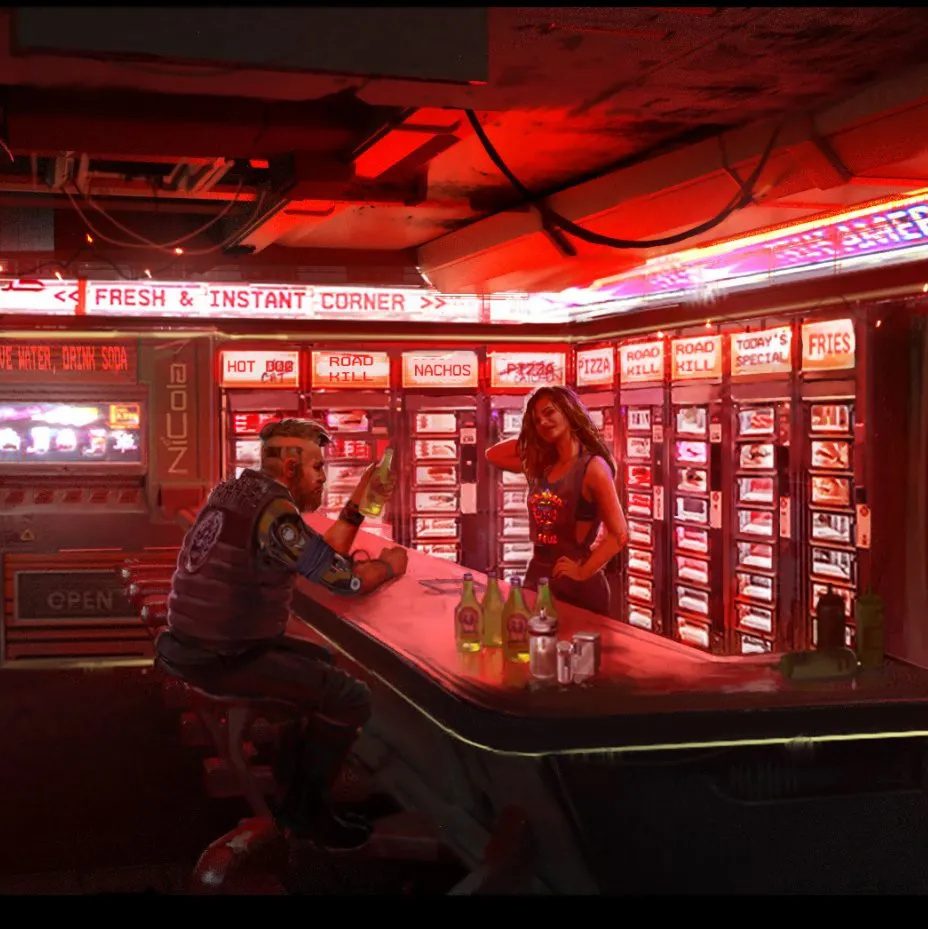
- In Cyberpunk 2077, this is Night City with its inequality, where the luxury of corporation’s borders on slums.
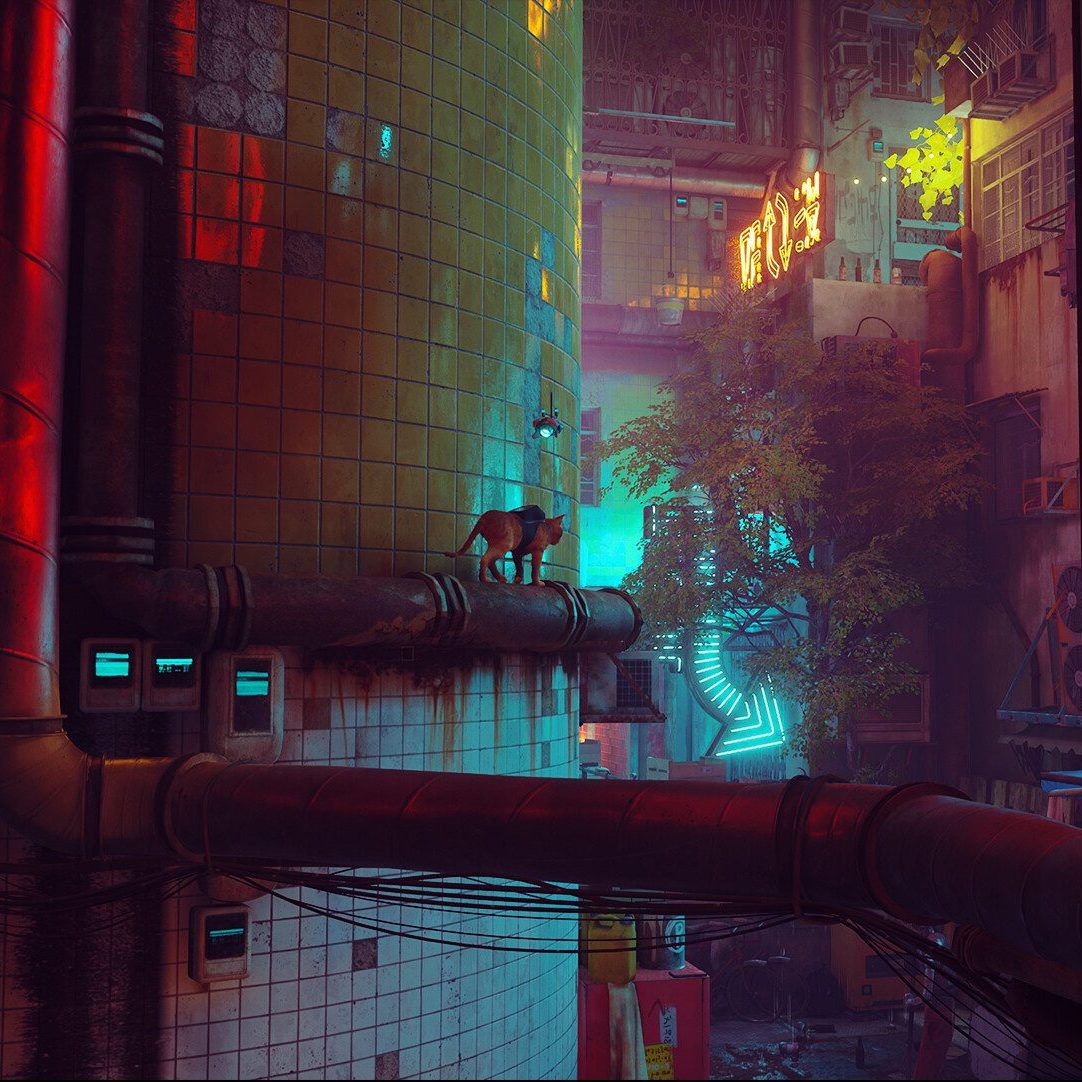
- In Stray, this is the closed “City 99”, where technology continues to work among garbage and rust even after the disappearance of people.
2. The theme of humanity and consciousness
Both projects explore the question: “What makes us human?”.
- Cyberpunk 2077 focuses on the digitization of consciousness and the loss of human identity through implants.
- Stray features robots (Companions) that mimic human life, emotions, and culture, effectively becoming the heirs of humanity.
3. Social dystopia
- Both worlds are dominated by a social hierarchy and an oppressive system of governance.
- In Cyberpunk 2077, this is the power of megacorporations (Arasaka).
- In Stray, this is a strict police regime in Midtown and the physical isolation of the lower levels of the city from the “upper world.”
4. Visual (Aesthetics)
The same visual code is used:
- An abundance of neon light against a backdrop of eternal darkness.
- Narrow, cluttered streets reminiscent of Asian metropolises (for example, the fortress city of Kowloon as a common inspiration).
- The important role of artificial intelligence and drones-assistants (B-12 in Stray and numerous AIs in Cyberpunk).
Although the player looks at this world from different perspectives – through the eyes of a mercenary or a cat – the philosophical foundation and the atmosphere of hopelessness mixed with hope are common.
The games Stray and Cyberpunk 2077 showcase remarkable artistry and creativity, each reflecting unique artistic visions.
Stray captivates players with its detailed urban environments, blending futuristic elements with a gritty, lived-in atmosphere. The game’s art direction emphasizes vibrant neon lights, intricate textures, and atmospheric lighting, creating an immersive world seen through the eyes of a stray cat. The artists behind Stray skillfully combine realism with a touch of whimsy, enhancing the emotional depth of the narrative.
Cyberpunk 2077, on the other hand, presents a sprawling dystopian cityscape filled with cybernetic enhancements, towering skyscrapers, and bustling streets. Its art style is bold and futuristic, featuring a rich palette of neon colors and high-tech designs that evoke a sense of chaos and innovation. The artists involved in Cyberpunk 2077 excel in world-building, crafting visually stunning environments that reflect both the allure and the darkness of a cyberpunk future. Their work contributes significantly to the game’s immersive storytelling and complex characters.
Together, Stray and Cyberpunk 2077 highlight the power of video game art to transport players into diverse and compelling worlds, showcasing the talent and vision of their creative teams.
It can be added to this comparison, but it belongs to another related direction – post-apocalypse.
What is in common
- The decline of civilization: In all three games, the world as we know is destroyed or radically changed.
- Survival of loners: The main characters are often “outcasts” or loners forced to survive in a hostile environment.
- Aesthetics of ruins: Stray and The Last of Us have a visual similarity in the depiction of abandoned cities, where nature gradually absorbs the architecture (rust, moss, vegetation).
- Deep drama: All three games place a strong emphasis on emotional connection and loss (for example, the relationships between Joel and Ellie, Vi and Johnny, Cat and B-12).
cyberpunk 2077 concept artists; cyberpunk 2077 lead world artist; stray – conceptual game art; senior expert concept artist.